Endnote, Tooth, Tooth
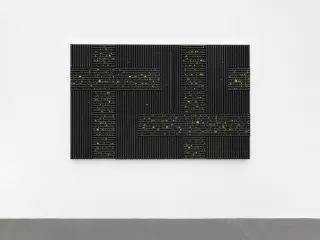
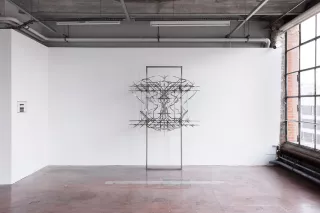
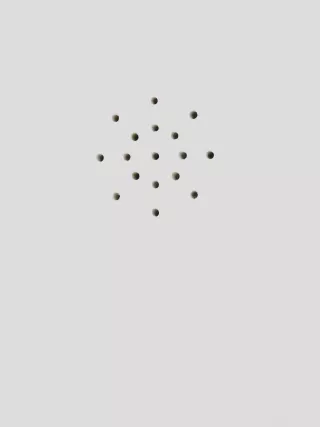
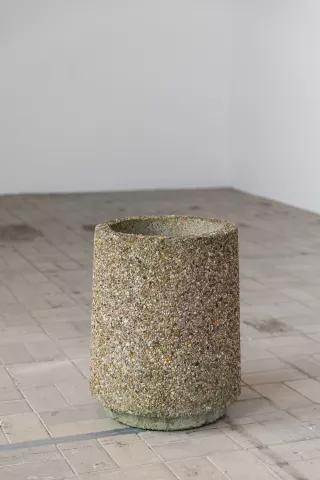
A two-tone painting with a visual language that is incomprehensible at first glance, the work Endnote, Tooth, Tooth is a fragment of a much larger piece. It consists of multiple coats of paint on paper and a piece of Plexiglas from an abandoned bus shelter. By affixing this found and already damaged object, Ian Kiaer highlights the vulnerability and fallibility present in each work. He creates a timeless work, beyond reality, indefinable and off-centre, forming a narrative void that only the viewer can recompose. This piece from the Endnote, Tooth project functions as an experimental arrangement which precedes the materialization of thought. In his deconstruction process, the artist uses the fragment or sample to question notions of totality and permanence. Taking artistic utopianism as his starting point, Ian Kiaer combines painting as a “minor form” with the duality between interior and exterior that is characteristic of architecture.
Text written by Oriane Poret as part of the partnership between the École du Louvre and Lafayette Anticipations – Fonds de dotation Famille Moulin.
Exhibition
Galerie Marcelle Alix, Paris (France)
from 05 Apr to 27 May 2017
Ian Kiaer

Born in 1971 in Londres, Royaume-Uni
La pratique artistique d’Ian Kiaer s’appuie sur une approche utopiste et expérimentale. Depuis plusieurs années, il mène le projet Endnote, Tooth qu’il présente sous des formes diverses. Il s’inspire librement des concepts de l’urbaniste Moshe Safdie et de l’architecte utopiste Frederick Kiesler, notamment de sa théorie du « corréalisme » et de Tooth House, projet en forme de dent humaine non réalisé à la fin des années 1940. Ian Kiaer crée ses tableaux, sculptures et installations à partir de matériaux fabriqués ou trouvés, brouillant ainsi la frontière entre intentionnalité et hasard.
Né en 1971 à Londres (Royaume-Uni), Ian Kiaer est diplômé de l’University College de Londres (1995). Il est également titulaire d’un master en peinture (2000) et d’un doctorat du Royal College of Art (2008) sur la maison comme modèle de pensée. Il vit et travaille entre Londres et Oxford.